
Home / Field Notes / Extreme-Climate Shooting
Extreme-Climate Shooting · September 28, 2026
Five Rules for Shooting Outdoors in Grays Harbor Wet
There are two kinds of wet. There’s the rain that shows up in the forecast, and there’s the wet that lives in the air here from October to May — the kind that doesn’t fall so much as settle on everything, including the inside of your lens. Crews who visit Grays Harbor plan for the first one. Brands that shoot their own content out here get taught about the second one the hard way, usually in the edit.
Weather-sealing is the least interesting part of working in it. Here’s what actually decides whether a wet day delivers.
1. Treat condensation as the real enemy, not rain
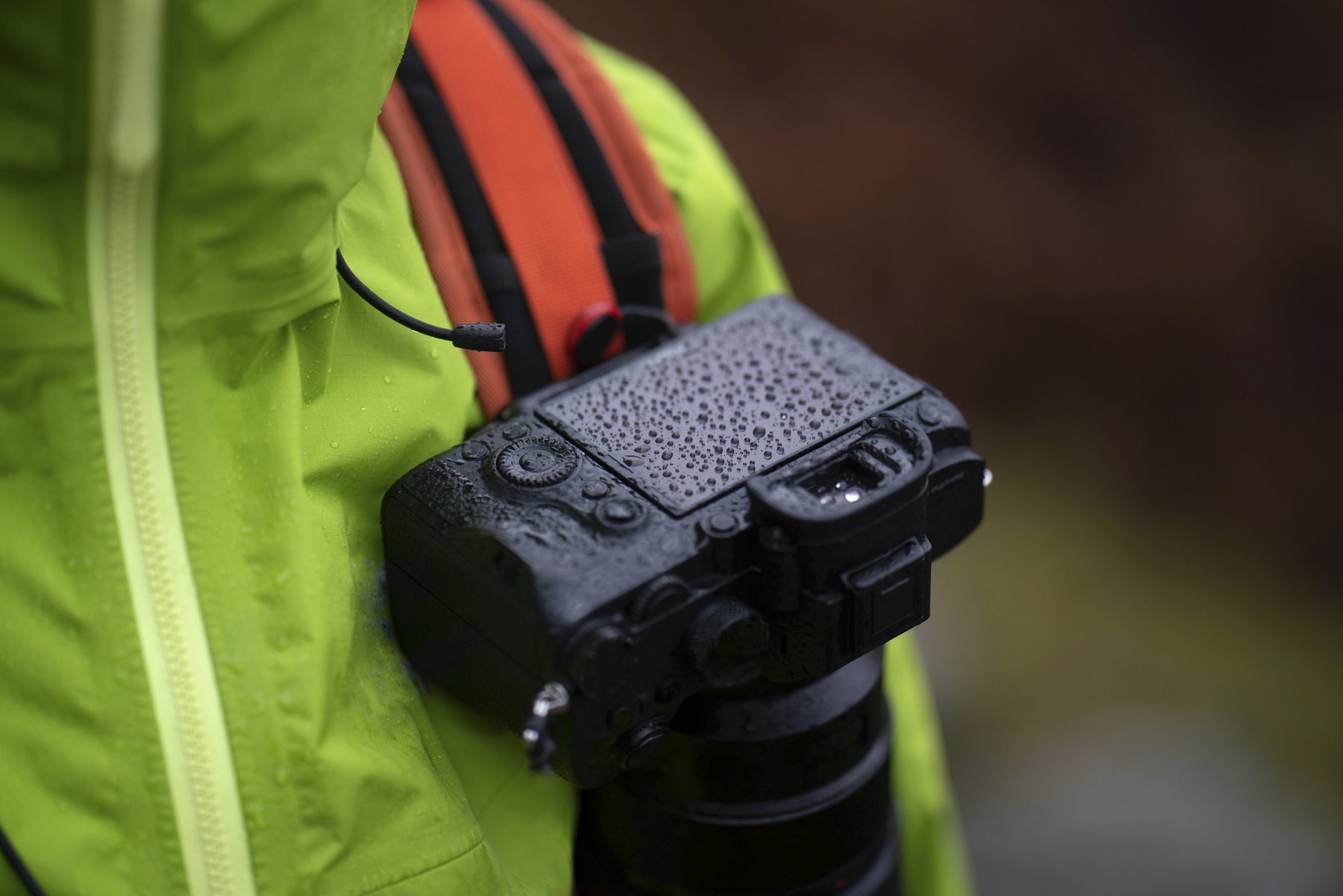
Rain lands on the outside of a camera, where a rain cover and a microfiber cloth handle it. Condensation forms on the inside, on glass and on sensors, when cold gear meets warm wet air — and there is nothing in your kit that fixes it in the moment. The fix is temperature discipline: let gear come up to ambient before you open anything, keep bodies and lenses out of the heated truck cab between setups, and seal everything in a bag with desiccant before you bring it indoors at the end of the day. A lens that fogs at 9am can cost you the entire morning block, because you cannot shoot through it and you cannot rush it dry.
2. Budget batteries for cold, not for runtime
A battery rated for a two-hour block gives you noticeably less of one at 40°F in a wind off the water, and it gives it to you without warning — the gauge holds and then falls off a cliff. Carry roughly twice what the shot list says you need, keep the spares in an inside jacket pocket where body heat works for you, and rotate cold ones back in to warm rather than writing them off. The same goes for anything else running on a cell: monitors, transmitters, the lav packs that always die first.
3. Protect the audio harder than the camera
Nobody watches a video and complains that the picture was slightly damp. They bail in three seconds when the sound is a wind roar with a person somewhere behind it. Wet days are almost always windy days here, so the deadcat goes on before you think you need it, the lav gets taped under a collar rather than clipped on top of a rain shell, and somebody puts on headphones and actually listens rather than watching a meter. Rain on a hood, on a jacket, on the nylon of a pack — all of it is louder in the mix than it is in the moment, and none of it comes out cleanly later.
A wet day doesn’t fail because of water. It fails because the plan was written for a dry one, and nobody decided in advance which shots were load-bearing.
4. Decide the weather plan before the weather happens
The useful question is never “are we shooting in this?” It’s “which three shots have to exist by the end of today, and where do they happen if the sky opens?” That gets answered on a planning call, in daylight, with the client in the room — a covered location that still looks like the brand, an interior fallback for the interview, an order of operations that front-loads whatever cannot be faked. A crew that walked in with that document can lose two hours to a squall and still deliver. A crew improvising shoots a little of everything and comes home with nothing that cuts.
5. Shoot the weather on purpose
The last rule is the one brands resist, and it’s the one that makes the footage worth something. Rain on a jacket shell, breath in cold air, mud on boots, a truck door slamming in a downpour — that is what your product looks like in use, and it is the opposite of the dry studio version everyone else in your category is posting. Gear built for the Pacific Northwest should be photographed in the Pacific Northwest, doing the thing it was built for. A clean product shot proves the thing exists; a wet one proves it works.
What this is really about
None of these are camera tricks. They’re decisions made before anyone gets wet — about temperature, about power, about sound, about which shots you can afford to lose and which ones you can’t. That’s why a crew that works in this climate year-round comes back with a usable day and a visiting crew comes back with a story about the weather.
If you’re planning an outdoor shoot this fall and the forecast is doing what it does here, grab a free 15-minute strategy call and we’ll walk the weather plan with you. Even if you shoot it yourself, knowing which three shots are load-bearing is worth the fifteen minutes.
Start here
Want this run on your numbers?
Fifteen minutes, no pitch. Bring the thing that isn’t working and we’ll give you a straight read.
Rather skip the form? contact@asparkcreative.com